


Foundations and Origins of the Blues
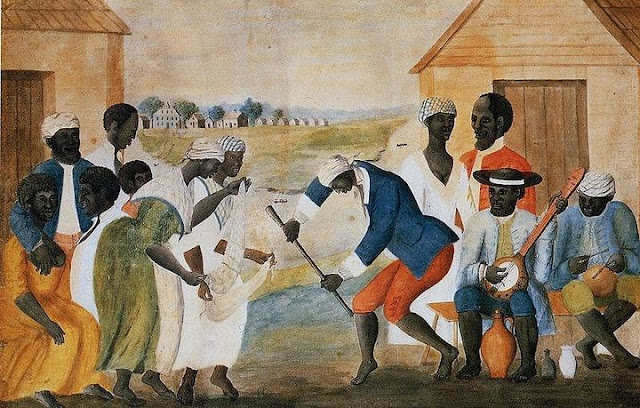
The Blues is not just a musical genre, it’s also a mood that reflects sadness and melancholy. As the root of much of 20th-century popular music, from jazz to rock ‘n’ roll and hip-hop, studying it allows us to understand fundamental transformations in contemporary society.
Social and Racial Context of Its Origin
The birth of the blues is intrinsically linked to the transatlantic slave trade that brought enslaved Africans to what is now the United States beginning in the 17th century. Under the brutal exploitation of southern plantations, they developed their own means of expression to convey the oppression, misery, and discrimination they endured. Unlike other groups who migrated voluntarily to the North American “melting pot,” they were brought as the cheapest labor force, forming an identity shaped by resistance and confrontation with a racist system.
Work, Migration, and Spirituality
The foundations of the blues lie in the fusion of different aspects of enslaved people’s daily lives:
- Work songs: A cappella melodies used to coordinate physical labor in cotton and tobacco fields. These songs often employed double meanings and irony to comment on the dehumanization imposed by plantation owners without them noticing.
- Spirituals: Religious chants blending European harmonies with African interpretative forms. These songs were not just acts of faith but laments that gave hope for freedom in this world, not only in the “afterlife.”
- The Great Migration: Between 1910 and 1970, around six million African Americans moved from the rural South to northern cities such as Chicago and Detroit to escape racism and seek employment. This migration transformed rural acoustic blues into urban electric blues, adapting it to the rhythm and tensions of metropolitan life.
Musical Structure
Blues is recognizable through a set of musical conventions:
- Twelve-bar form: A simple harmonic scheme based on the I-IV-V degrees of the scale.
- Call and response: A pattern inherited from African traditions in which a phrase sung or played by a soloist is answered by a chorus or another instrument.
- Blue notes: Notes that fall outside the logical major or minor scale, creating a “sad” or “aching” sound.
- Expressive techniques: Use of slide (bottleneck), bends, and vibrato on guitar and harmonica to imitate the moans and cries of the human voice.
Early Recordings and the Role of Women
Although instrumental recordings existed earlier, history changed on August 10, 1920, when Mamie Smith recorded “Crazy Blues.” This record was a massive hit, selling millions of copies, establishing blues as popular art, and opening the door to so-called “Race Records” targeted at Black audiences.
Women played a central role in this early stage. Divas like Bessie Smith (the “Empress of the Blues”) and Ma Rainey were the first stars of the genre. Through blues, these artists articulated a new recognition of individual desires and needs, bringing private issues (such as abuse or sexuality) into the public sphere. Their powerful voices challenged the conventions of the time and made blues a popular phenomenon long before legendary male figures like Robert Johnson recorded their first tracks in 1936.
The birth and golden age of the blues cannot be understood merely as a musical phenomenon but as a revolutionary act of female emancipation. While white society and the Black community itself tried to confine Black women to domestic roles and mandatory motherhood, blues divas used the stage to articulate what we now call Afrofeminism.
Mamie Smith: The Cry That Broke the Market
On August 10, 1920, Mamie Smith didn’t just record a record: she launched a “battle cry”. By turning “Crazy Blues” into a massive hit, Smith proved that Black women could capitalize on their own art in a system that historically treated them as property. Her success opened a crack in the recording industry through which hundreds of female voices entered, telling stories that were not the master’s but their own lives and desires through what became known as “Race Records.”
Classic Blues as a Space of Bodily Sovereignty
Female classic blues (1920–1929) was a woman-dominated genre blending folklore with vaudeville, creating a symbolic space where the personal became political. Figures like Ma Rainey and Bessie Smith actively challenged the patriarchal norms of the era:
- Independence and Divorce: Songs like “Sam Jones Blues” celebrated the end of marriage and the reclaiming of autonomy, proclaiming: “I’m free and living entirely alone.”
- Dissident Sexuality: Blues pioneered discussions of non-heteronormative desire. Ma Rainey, in her lesbian anthem “Prove It on Me Blues,” proudly sang about her preference for women and her masculine aesthetic (tie and collar), defying moral conventions.
- Condemnation of Violence: Lyrics explicitly denounced gendered abuse, bringing it from the private sphere into public community debate.
The “Masculinization” of the Blues: Why Did Women Disappear?
The disappearance of these women from the forefront was neither accidental nor due to lack of talent, it was the result of industry and social shifts:
- The Great Depression (1929): The economic crisis severely affected Black consumers, destroying the market for divas whose theater and orchestra shows were costly to produce.
- The Myth of Male “Authenticity”: As diva blues waned commercially, white record labels and researchers (like the Lomaxes) sought a sound they deemed more “pure” or “authentic.” This ideal focused on the rural, solitary bluesman, relegating women (the true pioneers) to the sidelines.
- Invisibility of Female Instrumentalists: Even though women like Memphis Minnie led bands and mastered guitar long before many famous men, historical narratives glorified the “lone Delta man,” burying the legacy of female instrumentalists.
Today, feminist reinterpretations of the blues seek to reclaim the genre (not as a male invention), but as a tool of liberation, resistance, and visibility created by women who refused to be silenced.